Pluto in the Second House
Power Through Possessions, Wealth & Inner Values
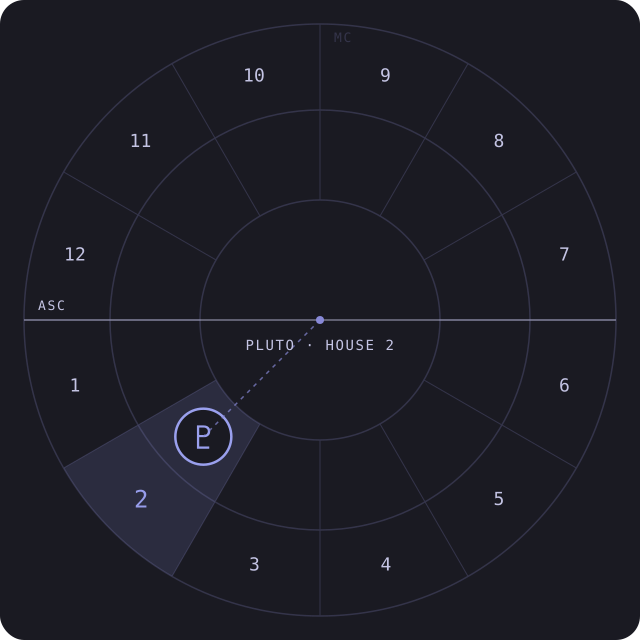
When Pluto occupies the Second House, survival itself becomes a transformational project. Resources—money, skill, the body’s material needs—are never simply accumulated; they are won, lost, and reconstituted through cycles intense enough to permanently alter the native’s relationship to security. The core mandate here is recognition: knowing precisely what resources you actually have, and building a survivable path from that honest inventory rather than from wishful thinking or fear.
How to read it
Pluto carries no classical dignity or sect; as an outer planet it is read purely by house and aspect. In the Second, Pluto is the process: the deep, often turbulent work of confronting one’s relationship to material security. The ruler of the 2nd is the result—it describes how earning capacity and the material world ultimately settle out, and whether the Plutonian upheaval produces lasting wealth or cycles of loss. Benefic aspects support financial recovery after crisis; hard aspects from malefics intensify the volatility and may bring legal complications around money.
The inner experience
Natives with this placement tend to develop an unusually sophisticated intuitive sense about value—financial, relational, and personal. Because Pluto strips the Second House down to bedrock repeatedly, they learn to distinguish what is genuinely sustaining from what is merely comfortable. Intuitive insight is the wealth code for this placement: the same psychological acuity that Pluto brings applies directly to detecting opportunity, reading markets, and understanding what people truly need. Financial crisis, when it comes, sharpens rather than destroys these natives—each collapse becomes a forcing function for refining their earning approach and clarifying their actual values.
The shadow
The hunger for security that Pluto in the Second generates can become so acute that ethical lines blur. The pull is toward gray industries or money-for-power arrangements, with attendant legal exposure. Beneath this is a deeper problem: a conviction that ordinary means will never be sufficient, that the only real safety lies in a kind of power that bypasses the rules. Hoarding behaviour, secrecy around finances, and a tendency to over-leverage all stem from the same unaddressed fear. The native may also confuse financial control with emotional safety in relationships, using money as a mechanism for keeping others close or at a manageable distance.
Living it well
The task is to develop a survival strategy that does not require domination to feel secure. That begins with honest recognition—seeing resources clearly, including the less obvious ones: perceptual depth, psychological resilience, the ability to rebuild. Financial disciplines that reward consistency over speculation tend to stabilise this placement over time. Most importantly, separating material security from emotional security—understanding that the two are related but not the same—frees this native to pursue wealth without the corrosive undercurrent of existential dread driving the strategy.
Free Tool
Calculate your birth chart
Turn these archetypes into your own sky — planets, houses, and aspects, free.
Open the CalculatorRelated in Planet